If there is one thing that has ruined more mornings than a lukewarm cup of coffee, it is the bathroom mirror shadow. You lean in to apply your skincare, shave, or simply check your reflection, and instead of a clear, bright view, you are met with dark, cavernous circles under your eyes and a nose shadow that makes you look like you’ve stepped out of a film noir. It’s not just frustrating; it’s a design failure that ignores the psychology of the room.
After spending eleven years in bathroom retail and design showrooms across Sydney, I’ve seen the same mistake played out in countless homes. We treat the bathroom as a utilitarian box—a place to 'get the job done'—and then we wonder why our daily rituals feel like a chore. The reality is that the bathroom is your daily reset. It is where you prepare for the world or decompress from it. If your lighting is working against you, your sanctuary is compromised.
Let’s talk about how we can fix this, without resorting to the typical "just gut the whole room" advice that ignores your budget and your sanity.
The Physics of the Shadow: Why Your Current Setup Fails
The "raccoon eye" effect—that distinct shadow created by overhead lighting—is the primary culprit. When you install a single downlight directly above your head, the light rays hit your brow bone and nose, casting harsh, downward shadows. It’s the antithesis of flattering, and quite frankly, it makes basic tasks like shaving or applying makeup feel like a guessing game.
Many of us fall into the trap of using "cool" white light (usually 6000K) thinking it’s the brightest option. In reality, it washes out your complexion and creates a clinical, sterile vibe that kills any sense of luxury. You don't want a surgery suite; you want a space that feels like a calm, gentle transition into your day.
The Secret Sauce: Layered Lighting
In interior design, we use the "three-layer" rule. If you aren't using all three, your room is incomplete. When you are looking for clarity at the mirror, you need to be thinking about how these layers interact with your reflective surfaces.
1. Ambient Lighting (The General Glow)
This is the base layer. It’s the light that fills the room. It should be soft and diffused. If you are relying on a single, harsh ceiling light as your ambient source, you’ve already lost the battle. Aim for fixtures that spread light rather than pinpointing it.

2. Task Lighting (The Practical Precision)
This is where we solve your shadow problem. Task lighting is about putting light where you need it. For the bathroom mirror, you need front-facing light. Light that hits your face, not your forehead. This is where a high-quality backlit mirror becomes an essential tool rather than a luxury accessory.
3. Accent Lighting (The Mood)
This is the "wellness" factor. Think of low-level LED strips under vanity cabinets or recessed niches in the shower. It doesn't illuminate your face, but it illuminates the *mood* of the room. It turns a sterile bathroom into a space you actually want to linger in.
Why a Backlit Mirror is the Gold Standard
I often point clients toward the LED Mirror World website when they complain about bathroom lighting. The reason? A backlit mirror provides a uniform, diffused glow that wraps around the edges of the glass. By illuminating the wall behind the mirror, the light bounces back onto your face, effectively erasing the harsh shadows cast by ceiling lights. It’s shadow-softening, it’s flattering, and it’s arguably the single most effective "small change" you can make in a bathroom.
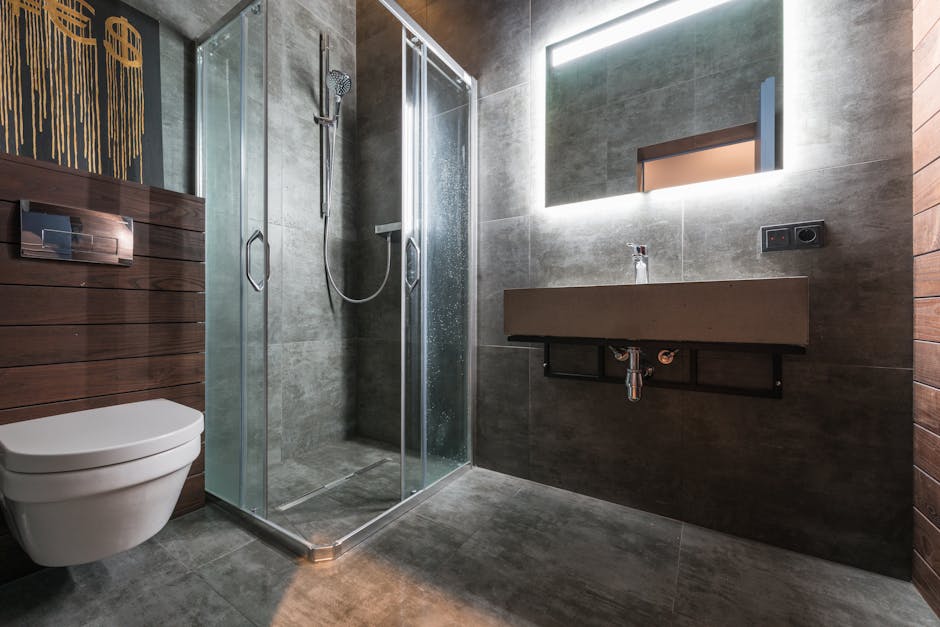
When choosing these, avoid the marketing fluff. Look for mirrors that offer adjustable colour temperatures. You want something around 3000K (warm white) for relaxing evening soaks, and 4000K (natural white) for your morning routine. If you want to see what professional photography looks like when lighting is balanced correctly, check out the resources on Shutterstock—often, the "clean" look you admire in design magazines is achieved by side-lighting or diffused front-lighting, exactly what bathroom resale appeal a backlit mirror mimics.
Common Mistakes to Avoid
During my time in the showroom, I saw many DIYers fall into traps that cost them more in the long run. Don’t repeat these errors:
- Ignoring the CRI (Colour Rendering Index): This is the technical bit, but I’ll keep it simple. CRI measures how accurately a light source shows colour. If your mirror light has a low CRI, your foundation will look orange, and your skin will look grey. Look for a CRI of 90 or higher. Forgetting about the "Login Flow": It sounds strange, but if you’re doing your research online, ensure you are getting the full picture. For instance, sometimes when researching trade-level advice or industry-specific lighting guides on portals like the Bendigo Advertiser, readers might get stuck behind a subscription/login flow. Don't be tempted to skip the deep-dive articles; often, that’s where the real-world experience of local tradies and interior experts is hidden. Assuming Price Equals Quality: I’ve seen cheap LED fixtures that last five years and expensive designer lights that flicker after five months. Since no specific pricing was provided in the source material for this topic, I’ll tell you this: prioritise the quality of the light (CRI and temperature) over the "brand" status of the housing.
Lighting Comparison Table
To help you visualise the difference, I’ve broken down the types of lighting configurations we usually see in Australian bathrooms:
Lighting Setup Effect on Face Verdict Single Ceiling Downlight Heavy shadows, "raccoon eyes." Avoid. Wall-mounted Sconces (Side of Mirror) Excellent, even light across the face. The gold standard for tasking. Backlit Mirror Soft, halo-like, minimal shadow. The best "all-in-one" solution. Over-mirror bar light Moderate, but can cast downward shadows. Good, but requires careful positioning.Small Changes That Change the Whole Room
As I mentioned, I keep a running list of "small changes" that move the needle. You don't need a $30,000 renovation to fix your lighting. Try these:
Change your bulbs: If you currently have "cool daylight" (6000K+) bulbs in your bathroom, swap them for "warm white" or "natural white" (3000K–4000K). It is the cheapest, most effective way to change the vibe of a room. Add side lighting: If you can’t change your mirror, consider installing slimline LED sconces on either side of it. They provide the cross-illumination necessary to neutralise shadows. Reflect more light: If your bathroom is dark, add a second, smaller mirror on the opposite wall. It bounces the light around and helps spread the glow, reducing the impact of a single shadow source. Clean your glass: It sounds silly, but a film of toothpaste spray or hairspray on your mirror can diffuse light incorrectly, making shadows look worse. A clear mirror is a happy mirror.The Wellness Perspective: Why This Matters
We often talk about the bathroom as a place of hygiene, but we need to start talking about it as a place of ritual. When you step into a bathroom that is lit with intention, your heart rate slows. You feel prepared. You feel seen—quite literally, without the distortion of ugly shadows.
Designing a bathroom isn't about vanity; it’s about respect for your own time. You spend a significant portion of your life in front of that mirror. Why spend it battling with bad lighting? Whether you are looking at options through the LED Mirror World website or reading up on local design trends in the Bendigo Advertiser, remember: the goal is comfort, clarity, and calm.
Don't be overwhelmed by the "renovate or bust" mentality found on social media. Most of the time, the fix isn't in the tiles or the tapware—it’s in the light. Adjust your light, adjust your perspective, and reclaim your morning ritual.
*Editor’s note: When planning your lighting upgrade, always consult with a licensed electrician. Electrical safety is non-negotiable, and they can provide specific advice on moisture-rated fixtures (IP ratings) which are vital for bathroom environments.*