Let’s be honest: at 7:00 am on a wet Tuesday in November, your bathroom is the most important room in the house. It’s where the transition from "vaguely conscious lump under a duvet" to "functioning member of society" happens. You are standing there, half-awake, gripping the cold porcelain of the basin, and the last thing you want is a light that makes you look like a crime scene investigator or, worse, a flickering ghost in a budget horror movie.
After 11 years of specifying lighting plans for UK bathrooms—from tiny en-suites in Victorian terraces to high-end new builds—I’ve seen every "smart" gadget come and go. People often ask me, "Is an LED mirror just a fancy light, or is there actual substance to the hype?" It’s a fair question, especially when you’re looking at price tags that make your wallet wince. Let’s strip back the marketing jargon and look at the real LED bathroom mirror benefits.
The Smart Bathroom Wave: More Than Just Gadgetry
We are currently seeing the "smart" home narrative pivot. A few years ago, it was all about having a kettle you could boil from your phone—which, let’s be real, is a solution looking for a problem. Today, the "smart bathroom" wave is focused on wellness design. It’s about creating an environment that respects your circadian rhythms rather than just stuffing the room with connectivity for the sake of it.
When we talk about smart bathroom upgrades, we aren't talking about flashing lights synced to your calendar. We’re talking about integrated lighting that understands that a 7:00 am Tuesday morning requires a soft, diffused glow—something that feels like the start of a productive day rather than a spotlight interrogation.
LED Mirrors: The New Standard for Hotel-Inspired Residential Design
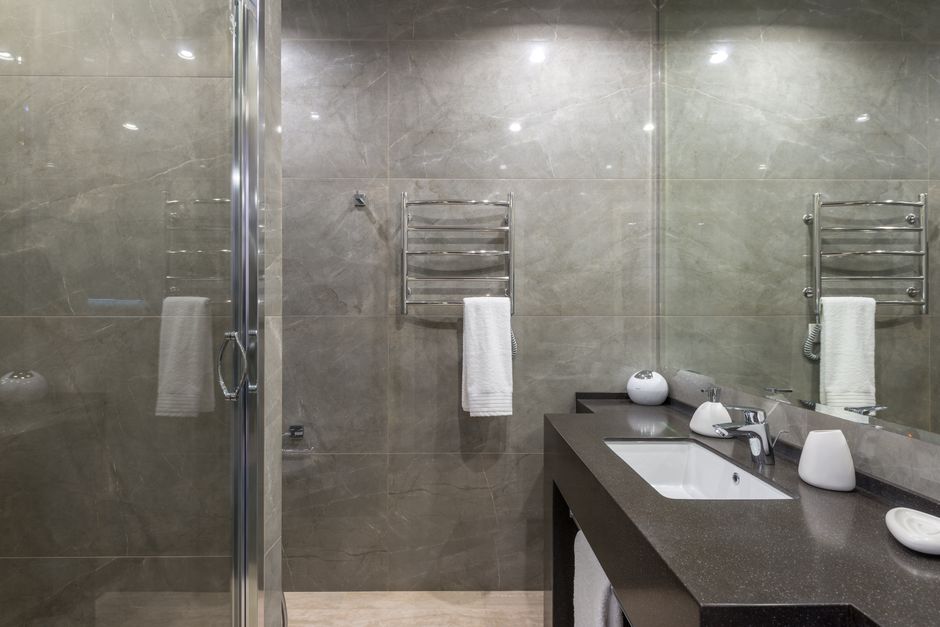
Why do we love hotel bathrooms? Because they feel like a curated retreat. The lighting is almost always indirect, flattering, and layered. An LED mirror is the easiest way to mimic that professional, hotel-inspired aesthetic in a domestic setting. If you’re still relying on a single, harsh ceiling light to shave or apply makeup, you’re doing yourself a disservice. That single point of light casts shadows under your eyes and nose, effectively ageing you by a decade the moment you switch it on.
More helpful hintsAn LED mirror—whether backlit or front-lit—creates a "halo" or "frame" effect that fills in those shadows. It turns a functional task into a ritual. When the lighting is balanced correctly, you aren’t just looking at your reflection; you’re looking at a well-lit version of yourself that doesn't feel like you've been caught in an operating theatre.
The "Bluetooth" Trap
I have to mention the Bluetooth integration. Many manufacturers push this as a "must-have" feature. They want you to stream your morning podcast or "spa vibes" playlist through your mirror. Here is my take: it is almost certainly another app you will forget exists. It’s another connection to manage, another signal that drops when you’re mid-shower, and another potential point of failure. If you want music, buy a dedicated waterproof speaker. Don't pay a premium for a mirror that tries to be a sound system and ends up being a mediocre version of both.
Backlit Mirror Pros and Cons
If you are choosing between mirror styles, you’ll likely end up looking at backlit versus front-lit configurations. Here is the lowdown on the trade-offs.
Feature Backlit Mirror Front-Lit (Edge/Frame) Mirror Aesthetic Soft, ambient, "floating" effect. Sharp, task-oriented, high clarity. Shadows Minimal (diffused light). Zero (direct illumination on face). Installation Needs a flat, ideally matte, wall. Works on any wall surface. Real-world feel Calm, spa-like at 7 am. Efficient, "business-ready" light.The backlit mirror pros and cons usually boil down to one thing: what do you need the mirror to *do*? If you want to create a calm, relaxing space for a long soak, go backlit. If you need clinical precision for complex grooming, go front-lit. And whatever you do, please, for the love of good interior design, avoid anything labelled "cool daylight" or "cool white" (anything over 4000K). It is the quickest way to make a beautiful bathroom feel like a motorway service station restroom.
Avoiding the "Blue Light" Disaster
This is my biggest pet peeve. I walk into showrooms and see gorgeous, expensive vanity units paired with "6000K" LED mirrors. It’s a tragedy. That overly blue light is the enemy of a peaceful morning. It suppresses melatonin, makes skin look grey, and highlights every single blemish while doing absolutely nothing to improve your mood.
When shopping for these mirrors, look for "Warm White" (around 2700K to 3000K) or, even better, adjustable colour temperatures. Being able to warm the light up when you're bleary-eyed on a Tuesday morning is a luxury, but it is one that pays off immediately. It’s the difference between feeling like you’re waking up and feeling like you’re being zapped by a laser.
The Practical Reality: Installation and Clutter
I am notoriously intolerant of messy cables. There is nothing worse than finishing a £10,000 bathroom renovation and seeing a coiled wire trailing down the wall because the electrician forgot to hide the feed behind the plaster. When you invest in a quality LED mirror, the installation is everything. You need a switched, fused spur or a direct connection into the lighting circuit so the mirror can be controlled via your standard wall switch.
If you see a mirror that requires you to plug it into an external socket, put it back on the shelf. That’s a DIY gadget, not a bathroom fixture. A proper, high-quality mirror should look like it is floating on the wall, integrated into the architecture of the room. Keep it clean, keep it wired correctly, and hide the add-on junk.
The Verdict: Is it Worth the Money?
So, are they worth it? Yes, but only if you buy for the right reasons. Don't buy a mirror because it has a digital clock that you'll have to reset twice a year, or because it has a Bluetooth speaker that will frustrate you. Buy it for the LED bathroom mirror benefits: the reduction of shadows, the improved colour rendering of your skin tone, and the way it elevates the room's touch sensor mirror atmosphere.
Summary Checklist for Your Purchase:
Check the Kelvin rating: Aim for 2700K–3000K. Avoid anything labelled "Daylight" unless you want to feel like a lab specimen. Look for an IP44 rating: This is a legal requirement for bathroom zones in the UK. If it’s not IP44, don't put it in your bathroom. Prioritise defogging pads: This is the one "feature" that actually delivers. If you take hot showers, a heated demister pad is not a luxury—it’s a necessity. Ignore the "bells and whistles": If it claims to have an app, a speaker, or a weather forecast, consider whether you actually want your mirror to be a secondary smartphone. Usually, you don't.Ultimately, a high-quality LED mirror acts as a lighting focal point. It sets the tone for your daily rituals. It makes the transition from sleep to wakefulness slightly less jarring. It won't fix your morning mood, and it certainly won't make you enjoy the commute, but at 7:00 am on a weekday, having a soft, flattering glow to face the day in is worth every penny.